I’ve returned to this piece by Al Filreis many times since it was first published in 2021. It came just after Amanda Gorman’s inaugural poem had stirred something awake in people who maybe hadn’t thought about poetry in years. What Al offers here isn’t just a defence of poetry’s place in public life—it’s a tender, clear-eyed reminder of why poems matter at all.
He writes about how how something is said can be just as important as what is said. That the poem itself must do the work of crying out, not just describe the cry. That the poet needs the reader, the listener, to step into the room with them and stay. These are the truths I keep close, especially on days when poetry feels too quiet to hold its own. It always does, somehow.
Al Filreis and the Power of Poetry
After Amanda Gorman’s inaugural poem captured attention, the director of Kelly Writer’s House reflects on what poetry can do.
Whenever poetry becomes a topic movingly discussed by many people for whom it is not a daily—indeed, not even a monthly—thing, I realize once again what draws me to it ever and always. In a poem, how you say what you say is as important as, sometimes more important than, what you say. Is that a radical view? After all, content is central to communicating.
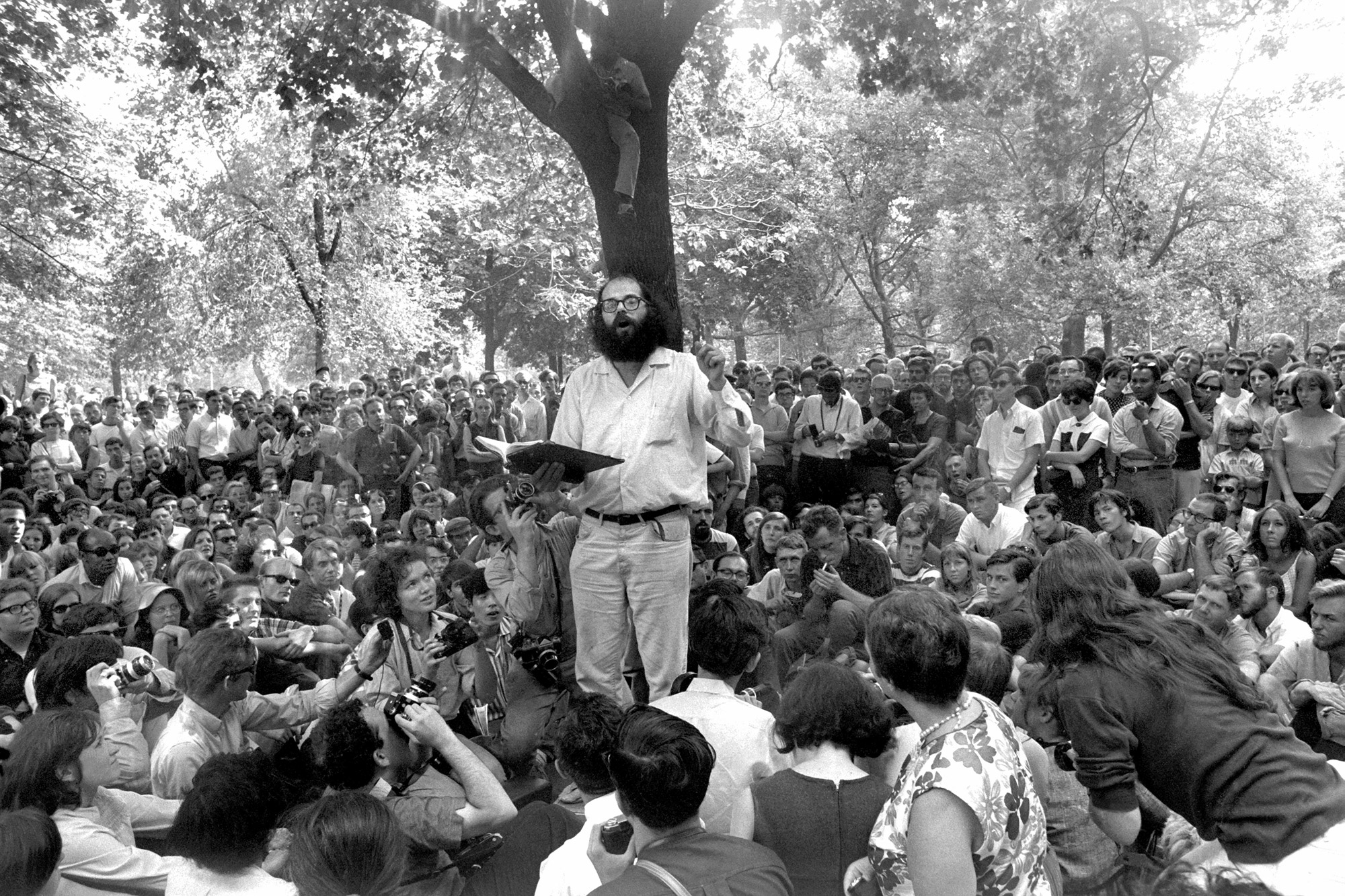
But what about times when communication has broken down? If Allen Ginsberg in writing and performing “Howl” did not in the poem itself emit such a howl—if he did not himself evince the “mad” non-conformity he saw in the best minds of his generation—we would no more remember his poem today than we do the many smart and interesting books of sociological nonfiction written during the 1950s about the supposedly disaffected (but actually, hyper-affective) postwar generation.
PennSound (the archive of recordings of poets, the largest in the world) includes the riveting performance Ginsberg gave before a huge, engaged, at times ecstatic audience in Chicago in 1959. How Ginsberg says “Howl” is as important as what he says, for sure. Words about crying out can themselves cry out…
Allen Ginsberg at a 1966 reading in New York City / New York Daily News Archive
So that is poetry. A form of saying. Not so much the things being said. I really don’t mind the cliché that understandably irks many of my colleagues in the field of poetry and poetics: when someone gives a powerful, memorable speech—when a speaker uses parallelism or seems to have cared about the rhythm of the sentences—we say “it has poetry.”
I don’t mind such obvious praise, because it once again puts poetry at the center of what causes us to listen, to really hear, to attend. A poem can help us comprehend our role as its respondent.
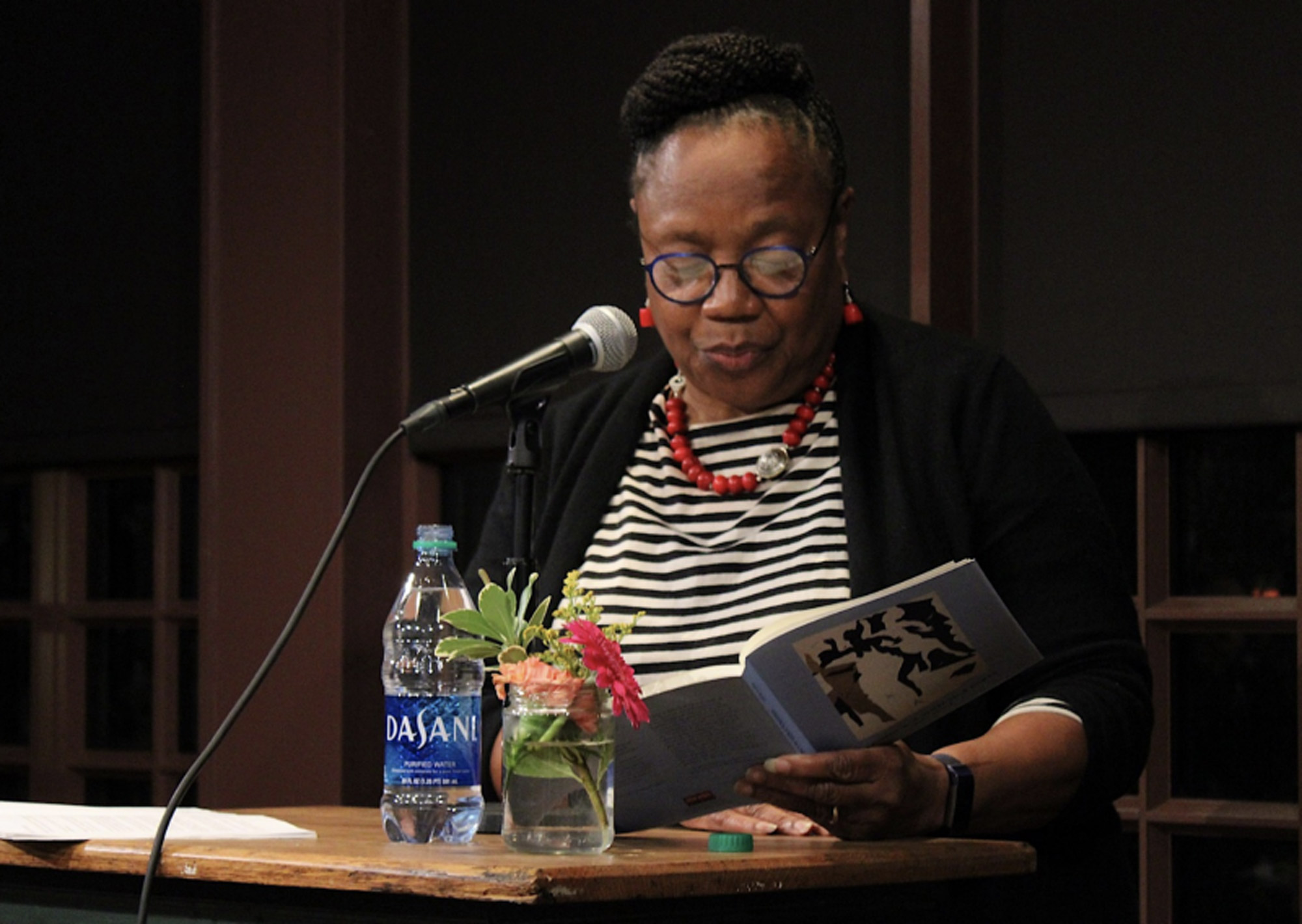
Erica Hunt
The great poet Erica Hunt is a Kelly Writers House Fellow during the spring of 2021. Whenever I read—or, better, hear recited—her poem “Reader we were meant to meet,” I think about how and why I cannot help but listen, cannot turn away from hearing, must attend. Because the poet is not just talking to me, but about me—about why I am necessary “even in the failure to communicate.” Poems I admire require my involvement in the project of “toppl[ing] distinctions” between who gets to talk and who is being asked to listen. And that and only that kind of engagement—the convergence of writer and reader, of speech-maker and audience, of the talker and the silent, of the poet as subject and the reader normally supposed to be an object—will “ease doubt.”
In a poem more about our role than about hers, Hunt is saying that solutions to the problems that plague us require the confluence of “I” and “you” that the poem both promises and models. “Reader,” Hunt requests of us, “step into my room,” and needs us to attend: “What will I miss if you blink.”
Poetry is that which encourages us to open our eyes and stay focused. And then the poet is only there if we are too.
Al Filreis is Kelly Family Professor of English, Director of Center for Programs in Contemporary Writing, and Faculty Director of Kelly Writers House.
This post was originally published in Omnia Magazine, 28 January 2021 (Source)
Al Filreis is not just the author of this piece—he’s also my professor in ModPo, and it’s been one of the great privileges of my life to be part of that community since its beginning in 2012. I often say that ModPo didn’t just teach me how to read poetry—it taught me how to be with it. Al’s generosity as a teacher, and the way he invites us to think with a poem rather than about it, continues to shape how I move through language, through life.
I still remember stumbling into ModPo not quite knowing what to expect—and finding not just a course, but a home. Al has a way of making poetry feel urgent and alive, of reminding us that we don’t have to read alone. That kind of presence—thoughtful, wide-awake, deeply human—has changed the way I understand poems, and maybe even how I understand myself.
If you’re curious: ModPo (short for Modern and Contemporary American Poetry) is a free online course offered through Coursera and the University of Pennsylvania, led by Al through the Kelly Writers House. It’s a living, breathing conversation where readers from all over the world come together to think through poems—slowly, generously, with care. You can move at your own pace or join the live 10-week version each fall.
It’s open to anyone, anywhere, and guided by Al alongside a brilliant team of teaching assistants. The course isn’t about finding the “right” interpretation—it’s about reading together, listening closely, and asking better questions. Whether you’re new to poetry or returning to it, ModPo is a place to fall in love with language all over again. Find more information at modpo.org or enrol through Coursera. I hope I’ll see you there.