

What the Wind, Rain, and Thunder Said to Tom by Tyehimba Jess
What the Wind, Rain, and Thunder Said to Tom
Tyehimba JessHear how sky opens its maw to swallow
Earth? To claim each being and blade and rock
with its spit? Become your own full sky. Own
every damn sound that struts through your ears.
Shove notes in your head till they bust out where
your eyes supposed to shine. Cast your lean
brightness across the world and folk will stare
when your hands touch piano. Bend our breath
through each fingertip uncurled and spread
upon the upright’s eighty-eight pegs.
Jangle up its teeth until it can tell
our story the way you would tell your own:
the way you take darkness and make it moan.
MARGINALIA
1.
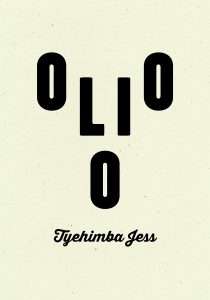
Day 3 of The Sealey Challenge. Today’s offering is Olio by Tyehimba Jess.
2.
I’ve often felt the weight of not being heard. Not just in white spaces, but also in male-dominated spaces. And so it’s a powerful experience to come across a book that resonates deeply with this sense of erasure. Olio by Tyehimba Jess made me yearn deeply to reclaim my place in the world, to not make myself small in order to fit in.
3.
This book is a weaving of unrecorded African American voices. The Jubilee poems in particular moved me—they are framed by lists of burned churches, which though in small print felt loud and unmistakeable in the insistence that they be recognised both on the page and in language. It is an invocation—as if the poet is urging the reader: say their names. Mouth them into being.
4.
Each character has their own song, and the whole book then becomes a chorus singing: you will hear us, and you will listen. The sonnet—a white creation, in the past has been a contested space when poets such as Claude McKay and Countee Cullen used the very same poetic form to confront inequality. And here Tyehimba Jess uses the same to subvert the boundaries of the form and to talk about the experience of being black. He also brings to light the despicable act of being made to perform in front of a white audience, of being othered and therefore subject to scrutiny and cruel enjoyment.
5.
Reading Olio is exhilarating—it is a confrontation, it is a mirror. What happens when you lose your name? Will someone remember my story after I’m gone? How can I continue to be a witness to those whose voices are being actively suppressed by the empire?
KEEP READING
 SOURCE
This poem appeared in Olio by Tyehimba Jess, published by Wave Books, 2016. Shared here with profound gratitude.
DESCRIPTION
“Part fact, part fiction, Tyehimba Jess’s much anticipated second book weaves sonnet, song, and narrative to examine the lives of mostly unrecorded African American performers directly before and after the Civil War up to World War I. Olio is an effort to understand how they met, resisted, complicated, co-opted, and sometimes defeated attempts to minstrelize them.”
ENDNOTES
- Read more poems by Tyehimba Jess • Find books by this poet • Or view my library
- Explore other works in pursuit of: existence • being human • identity • Or browse the index
- This is part of The Sealey Challenge.
DEAR READER
This little corner of the world is my passion project since 2005. My commitment is that it will always remain free to all. If this place holds meaning for you, would you consider supporting it? This can be in the form of a cup of coffee (+ other ways).
Note that Read A Little Poetry may receive a small commission if you make a purchase through any links on this site. It is at no additional cost to you and helps in the upkeep of this space.
Thank you for being here all these years—and into the future—as I hold poets to the light.


Karen Seashore
Wow, one powerful, powerful poem — and lovely reflections…
T.
Olio is one of those books. I will think about this poem for a long time.
T.